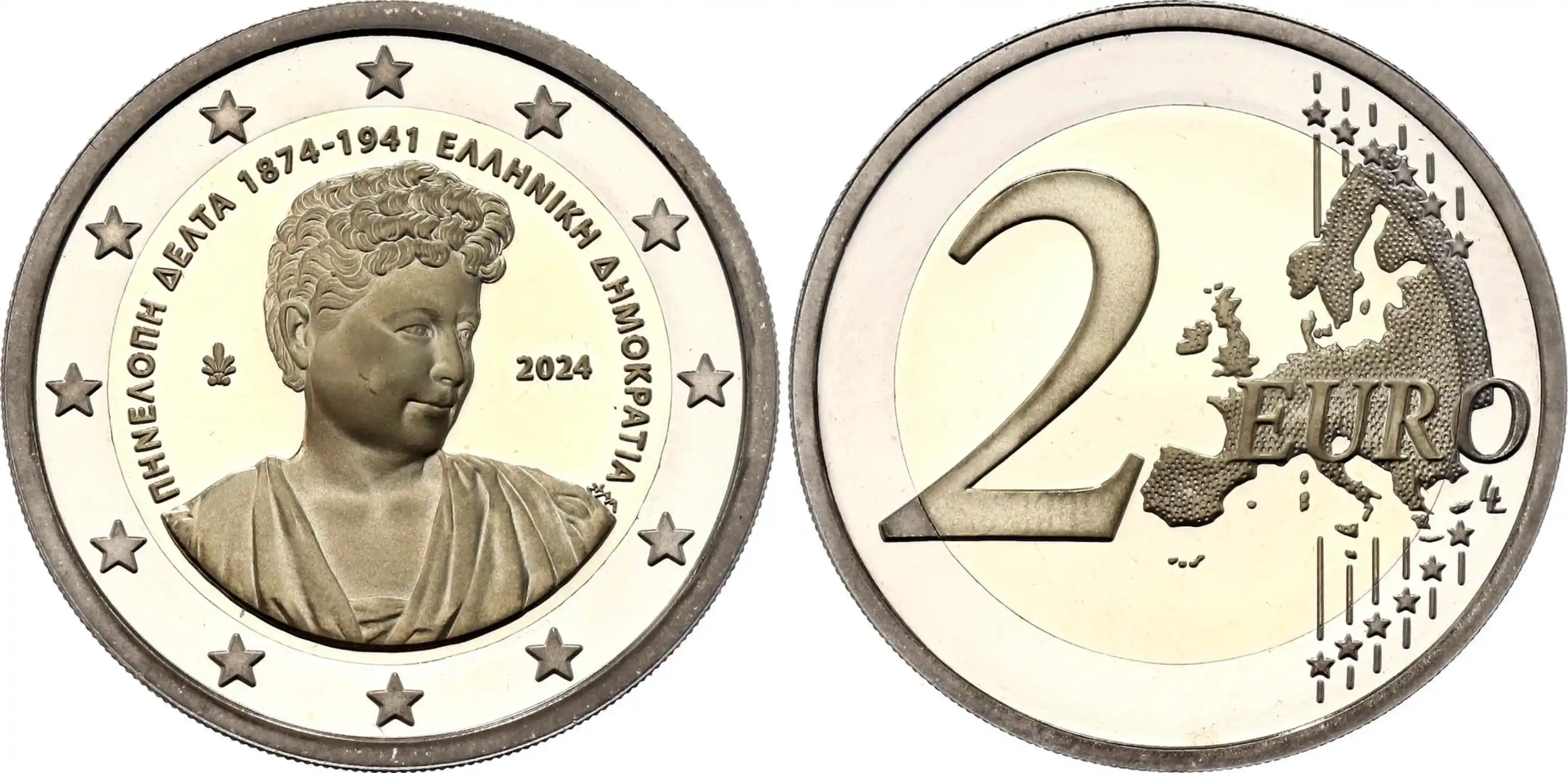
The average item price equals the face value, but valuable 2 euro coins with defects are worth up to €100 and more. You should look for off-center and wrong planchet defects.
2 Euro Coin Overview
Diameter | 25.75 mm |
Weight | 8.50 g |
Composition | Bimetallic |
Shape | Round |
Thickness | 2.2 mm |
To spot a defect, you must understand how a coin press functions. The two-euro coin features a complex structure. It combines an outer copper-nickel ring with a nickel-brass inner core
The Mechanics of Bi-Metallic Minting: How Errors Happen
The mint calls this central piece the pill. High-speed machinery joins these two separate parts at the exact moment the heavy steel dies stamp the design.
Planchet Errors or Striking Errors?
Planchet Errors – these anomalies happen to the raw metal blanks before they ever touch a coin design. The metal sheet vendor might punch out a defective ring, mix up the metal alloys, or fail to fuse the two components properly.
Striking Errors – these mistakes happen when the heavy industrial press malfunctions. The feeding mechanical arms might drop a blank off-center, a steel die might crack under intense pressure, or a coin might stick to the machinery and receive multiple impacts.
The Most Valuable 2 Euro Coin Errors in Circulation
Serious collectors spend thousands of euros on pieces that showcase dramatic visual flaws. The following examples represent the most sought-after, documented errors in the modern market.
The "Fried Egg" Error (Off-Center Core)
This mistake represents the visual poster child of the two-euro error community. It occurs when the inner pill shifts out of alignment before the stamping mechanism drops down.
The gold-colored core spills outside its neat boundary line and bleeds directly into the silver-colored outer ring. The final product resembles a sloppy fried egg in a frying pan.
Item Price €50–€150
Wrong Planchet & Mono-Metallic Slugs
Sometimes, the automated supply line drops the wrong raw material into the coin press entirely.
The machine fails to insert the golden center pill into the silver ring. It accidentally strikes a solid blank meant for a different denomination or fails to split the components. You get a solid silver-colored or solid gold-colored two-euro coin.
Item Price €200–€500
Major Die Rotations and Misalignments
When you flip a standard euro coin horizontally, the top of the national side should align perfectly with the top of the common map side.
The Malfunction – if a steel die breaks loose from its housing, it can rotate independently. The machine then strikes the national face sideways or completely upside down relative to the reverse map.
The Scale – minor rotations of five or ten degrees are common and hold little value. Collectors look for major alignments that clock in at 90 to 180 degrees.
Errors That Are Actually Worth Face Value
The internet contains a massive flood of false information. Bad actors regularly post standard coins on peer-to-peer auction sites and fabricate tales of rare variations to trick beginners.
The Greek 2 Euro S Mintmark Confusion
This single misunderstanding clogs internet search results more than any other topic. In 2002, Greece joined the Eurozone but lacked the physical equipment to manufacture enough coins for its citizens. They hired the Mint of Finland to help them fulfill the initial quota.
The Marker – Finnish technicians stamped a small letter "S" inside one of the stars on the front side of the Greek coin. The letter "S" stands for Suomi, the local name for Finland.
The Reality – Finland struck over 70 million of these coins. It is a completely standard design feature, not a rare mistake. A worn copy from circulation is worth exactly two euros. Only a flawlessly preserved, uncirculated bank-wrapper version holds a tiny collector premium.
Post-Mint Damage vs. Genuine Factory Flaws
People do strange things to coins after they leave the safety of the mint. Chemical altering and heavy environmental wear simulate errors but destroy your cash bonus.
Feature | Genuine Mint Error Characteristic | Post-Mint Damage Sign |
Metal Weight | Stays close to the official 8.5-gram spec | Shows loss of weight from acid or grinding |
Design Sharpness | Lettering stays crisp even inside deep folds | Details look smashed or blurred |
Edge Lettering | Features clean reeds and crisp local slogans | Rim looks filed down or flat |
How to Safely Check and Sell Your Error Coins
Follow this quick inspection routine to eliminate common fakes before you consult a professional:
Step 1 – Weigh the Coin
Buy a digital pocket scale that measures down to two decimal places. A genuine two-euro coin weighs exactly 8.5 grams. If your coin weighs 7.9 grams or 9.1 grams, you likely hold a fake planchet or a chemically altered piece.
Step 2 – Inspect the Edge Lettering
Turn the coin sideways. Check the safety reeds and look at the tiny country names or stars stamped into the edge. Genuine errors retain their official rim indicators.
Step 3 – Use a Magnifying Glass
Grab a coin loupe. Look at the borders of the error zone. A true factory error shows smooth flow lines where the hot metal expanded into the die under intense pressure.
Where to Avoid Forgeries and Scams
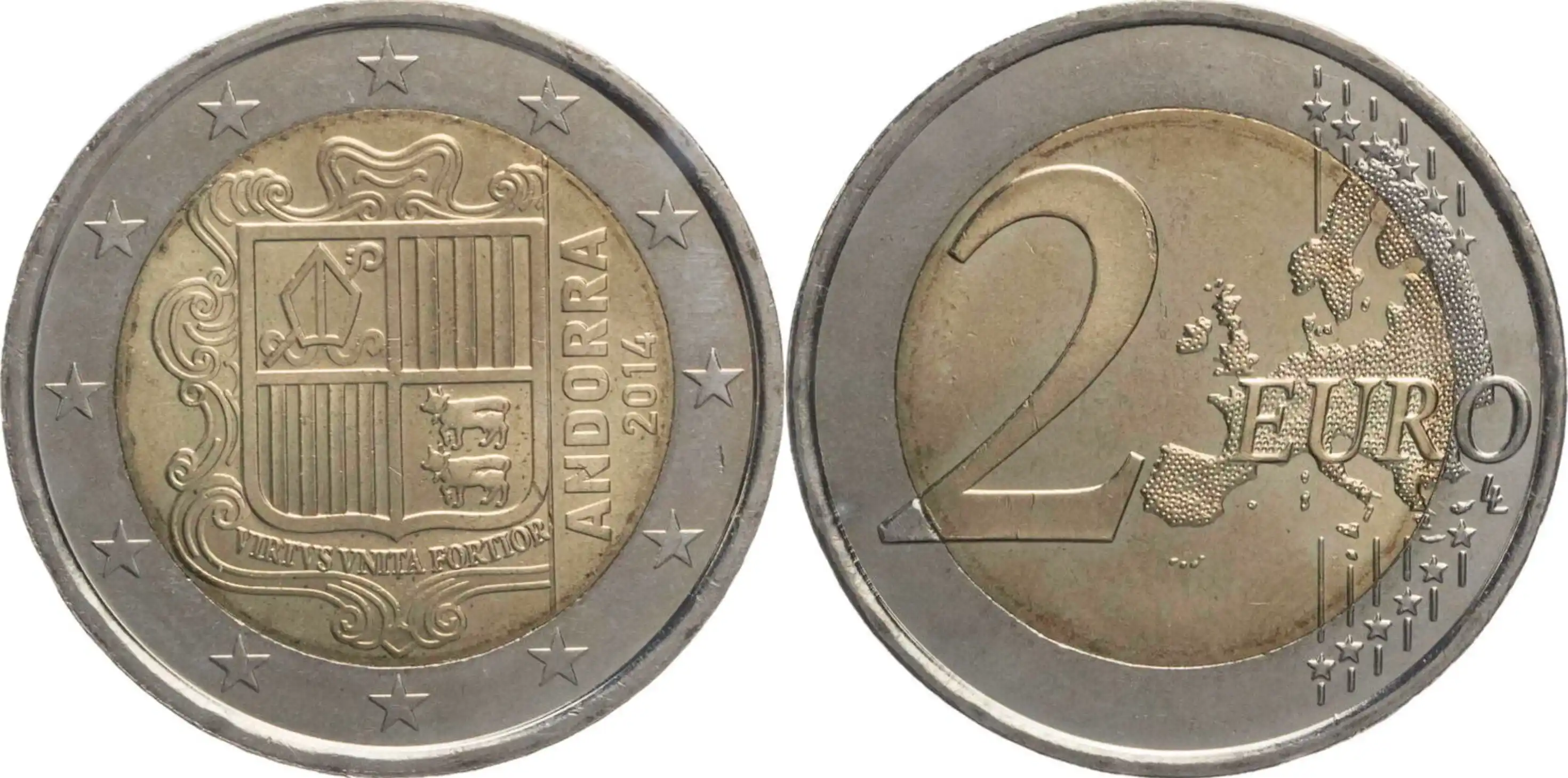
If you open eBay, you will find thousands of standard coins with generic descriptions like "Super Rare Error Greece 2002" priced at €25,000. Do not use these listings to judge the market value of your change.
If you suspect you own a high-value piece, submit it to a third-party grading service such as NGC. These independent authorities:
Examine your coin under lab conditions
Verify its authenticity
Lock it inside a clear plastic holder, and assign an official grade
A certified coin sells easily because buyers trust the plastic label over an unverified online description.